Q27 (b)
Question
Exposure to arsenic in drinking water has been associated with the onset of many diseases. The World Health Organisation recommends arsenic levels in drinking water should be below 10 µg L–1.
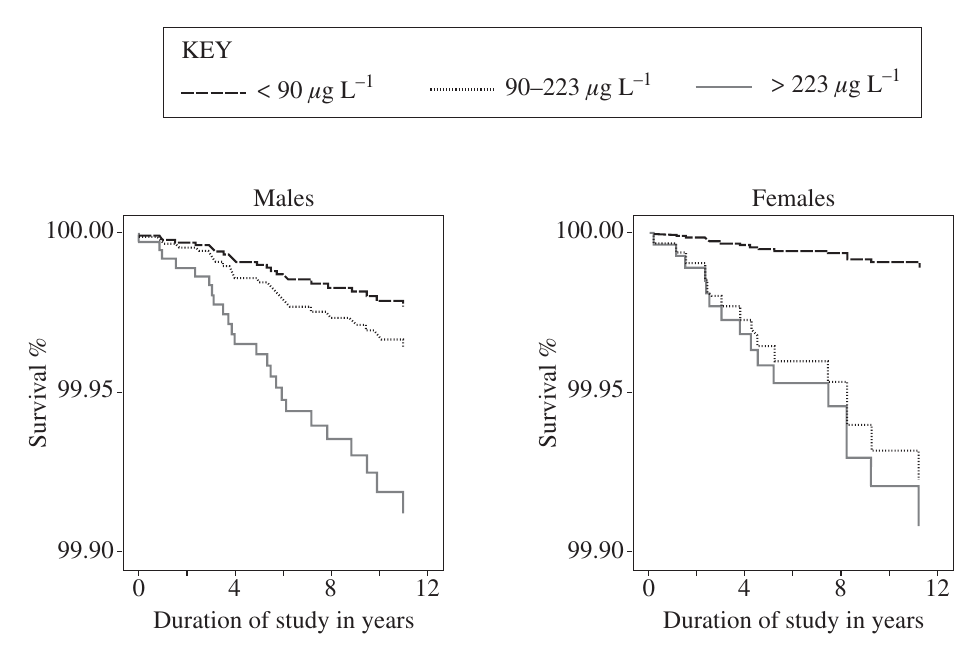
An epidemiological study involving 58 406 young adults was conducted over an 11-year period in one country to investigate young-adult mortality due to chronic exposure to arsenic in local drinking water. Each individual’s average exposure and cumulative exposure to arsenic over the time of the study were calculated. Age, sex, education and socioeconomic status were taken into account during the analysis of the results.
The graphs show survival rates for males and females over the 11-year period associated with different average levels of exposure to arsenic in drinking water.
The hypothesis put forward was that exposure to arsenic in drinking water increases mortality in young adults.
Discuss the data presented in the graphs in relation to this hypothesis.
Syllabus alignment
- EpidemiologyAnalyse incidence and prevalence patterns of non-infectious diseases in populations.
- EpidemiologyEvaluate the method used in an epidemiological study.