Q33 (b)
Question
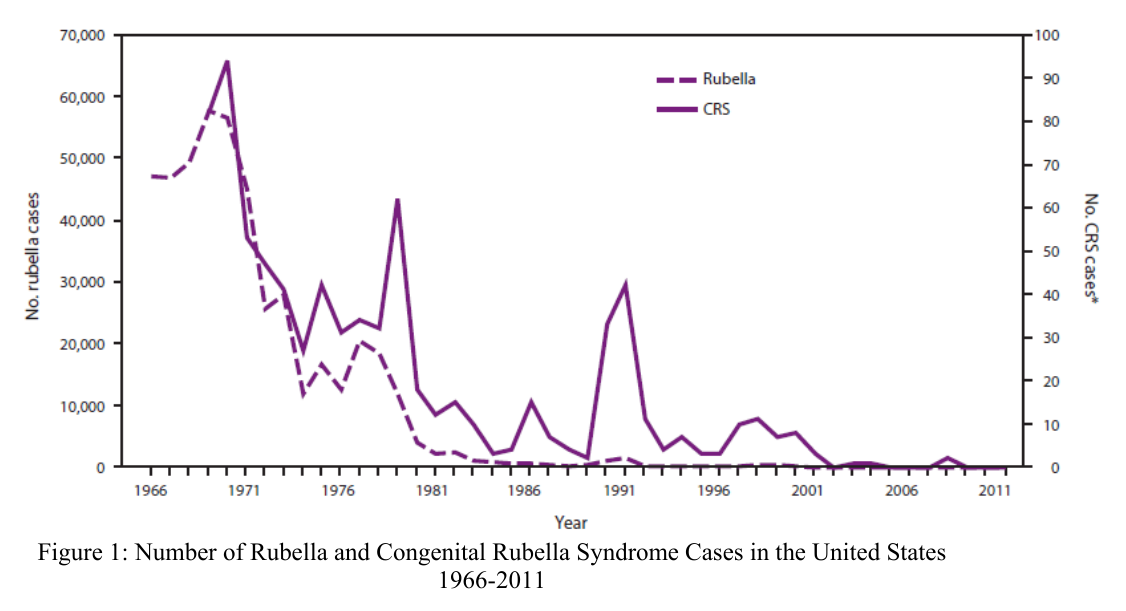
Rubella is an infectious disease caused by Rubivirus rubella. The disease is frequently mild, with a characteristic rash often appearing two weeks after exposure and lasting for three days. Other symptoms include fever, sore throat and fatigue, with joint pain common in adults. Up to half of infected cases are asymptomatic. Rubella is usually spread from one person to the next through the air via coughs of people who are infected. People are infectious during the week before and after the appearance of the rash. Only humans are infected. Once recovered, people are immune to future infections. In the early 1940s, Australian ophthalmologist Norman Gregg noticed a high incidence of congenital cataracts in babies whose mothers had suffered from rubella during pregnancy. It was then statistically shown that infection during early pregnancy may result in a miscarriage or a child born with congenital rubella syndrome (CRS). The main defects result almost exclusively from rubella infection occurring in the first 16 weeks of gestation and include deafness due to cochlea malformation, eye and cardiovascular defects and central nervous system damage leading to mental retardation. Rubella is preventable with a single dose of the rubella vaccine being more than 95% effective. When rubella vaccination became feasible around 1971, both the United States and the United Kingdom embarked on vaccination programs. In the United States, the strategy was to vaccinate infants, so that eventually the reservoir in childhood would be abolished. In contrast, the United Kingdom decided on a program of vaccinating adolescent girls. Both strategies were partial successes, in that CRS incidence began to decrease. Figure 1: Number of Rubella and Congenital Rubella Syndrome Cases in the United States 1966-2011
Use the evidence in the graph to justify the statement that the US program was only a partial success in reducing the rate of CRS.
Syllabus alignment
- Prevention, Treatment and ControlInterpret infectious-disease incidence and prevalence data in populations.